

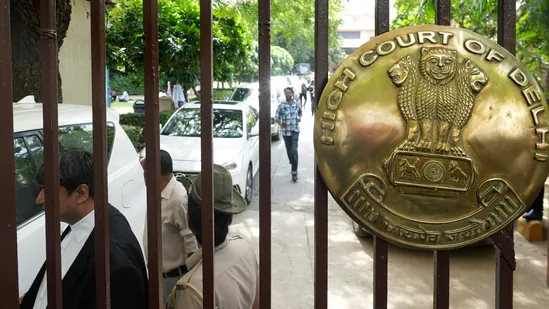
Delhi HC clears relocation of slum clusters near PM’s residence: ‘Mere eviction won’t violate rights’

The Delhi High Court on Monday directed over 350 residents of three slum clusters near the Prime Minister’s residence in the Race Course area to vacate the camps within 15 days and shift to alternative accommodation arranged by the authorities.
A bench headed by Justice Purushaindra Kumar Kaurav observed that the prevailing geopolitical situation and the national security concerns raised by the Centre constituted sufficient grounds for the residents’ eviction.
In its 26-page ruling, the court acknowledged that the residents’ rights to shelter and livelihood under Article 21 of the Constitution are intrinsically linked to the fundamental right to life, and that violation of one would generally affect the others. However, the court held that eviction and rehabilitation at an alternative site did not amount to a violation of these rights, provided their interests were adequately protected in accordance with the mandate of the Delhi Urban Shelter Improvement Board (DUSIB) Policy and Protocol.
“The court thus, finds that, considering contemporary geopolitical events, national security concerns of the respondents satisfy as specific reasons for eviction of the petitioners. The petitioners have fundamental rights to shelter and livelihood under Article 21 of the Constitution of India,” the court.
“These rights are intricately connected to the fundamental right to life and any violation of one of them would generally entail violation of all of them. However, their mere eviction and rehabilitation at alternative accommodation would not violate the said rights,” it added.
The order was passed in a petition filed by residents of Bhai Ram Camp, DID Camp, and Masjid Camp, challenging the decision to relocate them to alternate accommodation at Savda Ghera.
The residents contended that the rehabilitation violated the applicable policy, as several procedural requirements were not followed, and no reasons were given for shifting them to a distant location instead of providing in-situ rehabilitation.
The petitioners said their families had lived in the camps for generations and depended on nearby areas for livelihood through domestic and other blue-collar jobs, while their children studied in local schools. They argued that relocation would adversely affect their livelihood, education, and right to life under Article 21.
The Centre defended the eviction, contending that the JJ cluster was situated within a protected zone adjacent to an operational Air Force Station.
It argued that in the prevailing global security environment, marked by heightened threats and the possibility of conflict-like situations, the presence of unauthorised structures in such a sensitive area posed serious concerns for national security, public safety, and the safeguarding of vital installations.
It also submitted that essential civic amenities such as sewer lines, water supply, parks, and roads were already available at the relocation site, while additional infrastructure was under development.
The court was also informed that the government had agreed to bear the ₹1.12 lakh beneficiary contribution ordinarily payable by residents under rehabilitation norms, with families being granted three months to pay maintenance charges.