

DelhiIndiaLatest News
Delhi–Dehradun Expressway inauguration today: ₹11,868 cr investment, travel time cut down to 2.5 hours

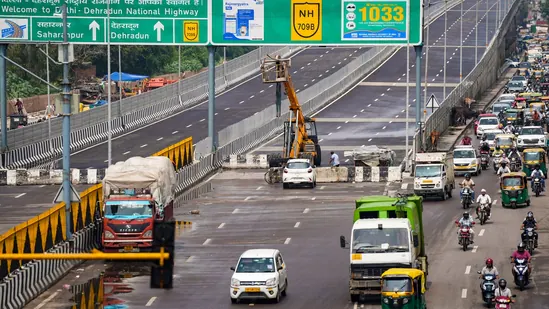
The Delhi-Dehradun Expressway, also known as the Delhi-Dehradun Economic Corridor, will be fully operational from today. The expressway will be inaugurated by PM Narendra Modi. He will visit UP’s Saharanpur to review the Wildlife Corridor on the elevated section of the corridor. before performs Pooja at Jai Maa Daat Kali Temple near Dehradun.
Take a look at key features of the Delhi-Dehradun Expressway below:
- Travel time between Delhi and Dehradun to drop sharply
The Delhi–Dehradun Expressway, passing through Delhi, Uttar Pradesh, and Uttarakhand, will significantly cut travel time between the two cities, from over six hours currently to around two and a half hours. - ₹11,868.6 crore mega infrastructure project
The project was launched in February 2021, with Union road transport and highways minister Nitin Gadkari laying the foundation stone. Prime Minister Narendra Modi laid another foundation stone in December the same year. The expressway has been built at a total cost of ₹11,868.6 crore and was originally slated for completion by December 2024. - First stretch already operational
A 32-km stretch, from Delhi (Akshardham, Geeta Colony, Shastri Park) through Mandola Vihar in Ghaziabad to Khekra in Baghpat, was completed by mid-2025 and opened to the public in December 2025. - Seamless connectivity with major expressways
The expressway features more than 100 underpasses and five railway overbridges. It will connect with key corridors such as the Delhi–Mumbai Expressway, the Eastern Peripheral Expressway, and routes leading to Haridwar and Roorkee. - Strong focus on wildlife protection
A major highlight is the 12-km elevated wildlife corridor through Rajaji National Park, designed to ensure safe animal movement. It includes six animal underpasses, eight animal passes, two 200-metre-long elephant underpasses, and a 370-metre tunnel near the Daat Kali temple. - Four-phase construction plan
The expressway has been developed in four phases. Phase 1 covers a 32-km, 12-lane stretch from Akshardham Temple in Delhi to the Eastern Peripheral Expressway near Baghpat. Phase 2 extends 118 km from the EPE to the Saharanpur Bypass, featuring six lanes, seven interchanges, and 60 underpasses. Phase 3 spans 40 km from the Saharanpur Bypass to Ganeshpur with six lanes. Phase 4 connects Ganeshpur to Dehradun over 20 km, comprising 4–6 lanes and including twin tunnels as well as elevated sections designed for wildlife movement. - Equipped with advanced traffic systems
The corridor is fitted with an Advanced Traffic Management System (ATMS) to enhance safety and improve traffic efficiency, according to a PMO press release.