
Outrage against Balen Shah’s Nepal govt after bike rider self-immolates, triggers protests

The death of a 25-year-old man who allegedly set himself on fire outside a government office in Kathmandu has triggered widespread protests in Nepal, with demonstrations erupting both inside Parliament and on the streets as people demanded an impartial investigation into the incident on Friday.
The public outcry prompted the government to set up a five-member probe committee to investigate the case, according to news agency PTI.
Man self-immolates, outrage in Nepal
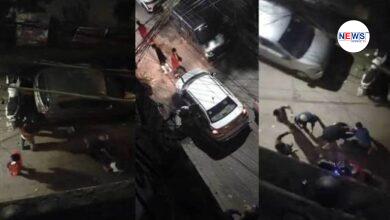
Ganesh Nepali, who earned his livelihood as a ride-sharing motorbike rider, was fined NR 1,000 after Kathmandu Metropolitan Police locked his motorcycle for allegedly being parked in a public space outside the Passport Office on Thursday.
According to eyewitnesses, following a verbal altercation with police officers, Nepali poured petrol from his motorcycle over himself and set himself ablaze. Police personnel rushed to extinguish the flames, but he sustained severe burn injuries, the news agency’s report added.
He was taken to Kathmandu’s Bir Hospital, where he succumbed to his injuries early Friday morning.
In a statement, the Kathmandu Metropolitan Police said that “the tragic incident happened as we tried to implement traffic regulation.”
Resentment against Kathmandu’s municipal police
The incident has brought long-simmering resentment against Kathmandu’s municipal police to the forefront, with legal experts and former security officials accusing the local administration of repeatedly exceeding its constitutional mandate.
They argue that the municipal police, whose role is meant to be administrative and facilitative, have increasingly adopted aggressive enforcement methods resembling those of the federal Nepal Police, according to a report by The Kathmandu Post.
“The legal framework does not envision the municipal police as a force authorised to use physical coercion or riot-control tactics. Their primary mandate is to facilitate administrative functions within the metropolis through persuasion and community engagement,” said senior advocate Raju Chapagain.
“When issues arise regarding traffic or street obstructions, the matter should be referred directly to the traffic police. Instead, we have witnessed municipal officers relentlessly chasing vendors, confiscating private property, and physically assaulting citizens, which is entirely illegal.”
Opposition on ‘cruel government’
Speaking in the National Assembly, Nepali Communist Party lawmaker Bishnu Bahadur Bishwakarma blamed the government’s heavy-handed approach for the tragedy. “This cruel government, which compelled a citizen to commit suicide, has no right to remain in power,” he said.
In the House of Representatives, Nepali Congress chief whip Basana Thapa said, “The government has failed to protect the lives of its citizens.”
Soon after news of Nepali’s death emerged, hundreds of young protesters gathered at Maitighar Mandala, outside the Singhdurbar Secretariat, chanting slogans demanding the prime minister’s resignation.
The demonstrators accused the state machinery of being indifferent to the struggles of the poor and working class and called for an impartial and independent investigation into the incident.
The government has constituted a five-member probe committee headed by Deputy Inspector General of Police Govinda Thapaliya to investigate the circumstances surrounding the rider’s self-immolation.