
Marriage, Manipulation, Drugs: ‘Love Jihad 2.0’ Racket Busted In UP, Hindu Men Lured Into Islam

Not girls, but young men were the prime targets of an interstate religious conversion gang that the Uttar Pradesh Police busted in Bareilly. Described by investigators as “Love Jihad 2.0,” the racket allegedly trapped Hindu men into Islam through marriages, manipulations, and even drug addiction.
Unlike earlier cases where women were targeted, Love Jihad 2.0 marks a new twist — young Hindu men are now the focus, lured into Islam through marriages, manipulation, and even drug addiction. Officials say this reflects a worrying rise in conversion cases across Uttar Pradesh. In July, the STF had arrested Changur Baba alias Jamaluddin and his aide Nasreen from Lucknow for allegedly converting Hindu women and amassing crores, now under ED probe. But the Bareilly case stands out. Police allege Abdul Majeed’s gang trapped vulnerable Hindu men — students, teachers, unemployed youth — with promises of marriage, acceptance, or money. “This time Hindu youths were systematically drugged, brainwashed, and converted,” said Bareilly SP (South) Anshika Verma, who is leading the probe.
Pattern of Complaints Leads Police to Kingpin
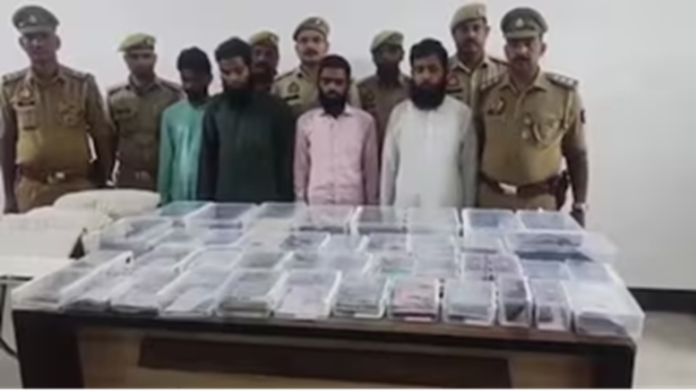
The Bareilly module of Love Jihad 2.0 surfaced after families complained about missing or suddenly converted youths. Police spotted a pattern in FIRs mentioning young men lured with marriage proposals or financial promises. Acting on leads, a special team tracked calls, transactions, and movements, identifying Abdul Majeed of Faiznagar as the kingpin. Surveillance exposed his links with operatives across districts, leading to multiple raids. Police have so far arrested four individuals: Abdul Majeed, 35; Salman Raza, 30; Mohammad Arif, 29, of Kareli; and Mohd Faheem, 24, of Saidpur Chunnilal village in Bareilly district. Another suspect, Mahmood Beg, remains at large. Investigators believe the network is linked to one Baba Chhangur, who is said to be the mastermind and is currently under the police radar.
The Modus Operandi
According to investigators, the gang followed a layered process to ensnare victims. Young men were first approached either in person or through social media platforms and gradually drawn into relationships under the pretext of friendship or marriage. Once emotionally invested, they were pressured to embrace Islam, often with assurances of stability and a shared future. Those who resisted were subjected to psychological manipulation and, in several cases, introduced to addictive substances to keep them under control. Police officials said the intention was not just religious conversion but also to weaken family bonds and ensure the men’s continued dependence on the gang.
The police narrative has chilling human stories behind it.
Prabhat turned to ‘Hameed’
Prabhat Upadhyay, a visually impaired government teacher posted in Bulandshahr, had a troubled personal life—his wife had divorced him. Educated at Aligarh Muslim University and later Hyderabad Central University, he often visited a restaurant in Bareilly, where he befriended some men who turned out to be part of the network. They offered him the prospect of a second marriage, gradually indoctrinated him with Islamic teachings, and persuaded him to adopt a new identity—Hameed. Just before his conversion was formalised through circumcision and marriage, the police raided the group and foiled the plan.
Brijpal Singh was made ‘Abdullah’
In Bareilly’s Kareli village, 40-year-old coaching teacher Brijpal Singh had fallen into despair after an accident left him unable to work, his father’s death, and his sister’s divorce. Unmarried and depressed, he came in contact with the group, which convinced him that Islam offered equality and solace. Brijpal adopted the name Abdullah and married Tabassum, the sister of one of the members. More disturbingly, he persuaded his mother and sister to convert too. Similarly, in Izzatnagar, Bareilly, a 17-year-old B.Com student supporting his family by working part-time at a salon was introduced to drugs by a co-worker—allegedly part of the gang. Once addicted, he was gradually fed Islamic literature and made to offer namaz. Police say he was just one step away from being converted, with circumcision already planned, when the network was exposed.
According to officers, the boy’s mental health has deteriorated due to prolonged drug use, and he is now undergoing treatment.
Over 100 photographs of Muslim girls recovered
During raids at multiple locations, police seized incriminating items including fake identity cards, mobile phones with encrypted chats, bank passbooks, SIM cards registered under false names, marriage certificates, and religious conversion documents. A large cache of sedatives and tablets allegedly used to keep victims dependent was also recovered, along with laptops containing digital records of men targeted across various states.
Investigators believe the large collection of Muslim women’s photographs found on the group’s devices were meant to be shown to Hindu men as potential brides, ensuring conversion through marriage. “Over 100 photographs of Muslim girls have been recovered. We are verifying their identities and role. The pattern suggests they were being projected as marriage prospects for vulnerable Hindu men,” said SP Verma.
A case has been registered against five accused under BNS sections 140(3) and 351(3), and sections 3 and 5(1) of the Uttar Pradesh Prohibition of Unlawful Conversion of Religion Act, 2021. Police sources added that if the role of drugs in the racket is firmly established, provisions of the NDPS Act may also be invoked. Officials confirmed that more arrests are expected as the probe widens. “This is just the beginning. Our priority is to safeguard the youth and dismantle the entire racket,” an officer said.