
Rath Yatra: SC upholds temporary stay on animated movie, clears release after festival

The Supreme Court on Friday refused to interfere with the temporary stay on the release of the animated film Mahaprabhu Jagannath, directing that it be released only after the conclusion of the Puri Jagannath Rath Yatra on July 27, saying the “balance” in the present case required that the film wait until the religious festivities were over.
A bench of justices BV Nagarathna and R Mahadevan modified the Orissa high court’s interim order to permit the nationwide release of the film on or after July 28 instead of keeping the matter pending till the next hearing before the high court on August 5.
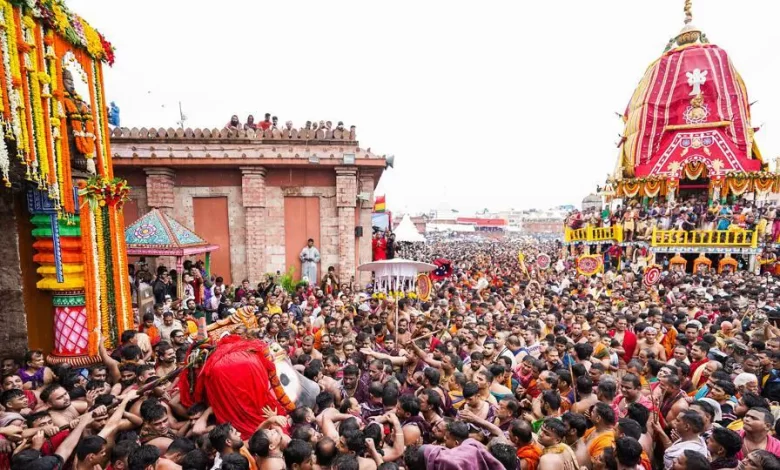
“We are apprised that the Lord Jagannath Yatra festival has commenced on July 16 and will continue until July 27… In the circumstances, we permit the film to be exhibited on or after July 28,” the bench ordered.
The court was hearing an appeal by the film’s producer, Ele Animations Pvt Ltd, challenging the Orissa high court’s July 15 order restraining the release of the film over objections that it did not faithfully adhere to the Skanda Purana and temple traditions associated with Lord Jagannath.
During the hearing, Solicitor General Tushar Mehta, appearing for the Centre and the Odisha government, informed the court that a special screening of the film had been held before the Gajapati Maharaja of Puri and the Shree Jagannath Temple Administration, where several changes were suggested but were allegedly not incorporated by the producers.
“There was a special screening before the Gajapati Maharaja and the Shree Jagannath Temple Administration, but the suggested changes were not incorporated,” Mehta submitted.
The bench then asked when the annual Rath Yatra rituals would conclude.
When Mehta informed the court that the festival would end on July 27, Justice Nagarathna observed: “After the rituals are over, let it be released…this is balance.”
Emphasising that the restriction would only be temporary, the bench remarked: “When the devotions of devotees are reduced, it can be released.”
Mehta agreed that an outright prohibition on the film may not be justified but urged the court to ensure that concerns regarding the depiction of Lord Jagannath were examined expeditiously by the high court.
“I agree you cannot stop a movie, but there are serious concerns. Instead of August 5 when the high court has fixed it, let the high court prepone the hearing,” he submitted.
Senior advocate Devadatt Kamat, appearing for the producer, argued that once the Central Board of Film Certification (CBFC) had granted certification, the authorities could not seek to revisit the contents of the film.
“Once a CBFC certificate has been issued, it is not open for them to now argue against it… the petitioner cannot be a super-regulator. I have invested crores of rupees. There will be a grave economic loss,” Kamat submitted. He also informed the court that a television series based on the same character had already been released on YouTube.
Balancing the competing claims, the bench declined to lift the embargo immediately but curtailed its duration by allowing the film to be released immediately after the conclusion of the nine-day Rath Yatra, which commenced in Puri on July 16 and will culminate on July 27.
The controversy originates from a public interest litigation before the Orissa High Court, where the petitioners contended that the film’s portrayal of Lord Jagannath departed from the Skanda Purana, the Brahma Purana and long-established temple traditions. They also alleged that despite objections raised during a special screening attended by the Gajapati Maharaja and temple authorities, the producer retained several disputed scenes in the final version.
The producer, on the other hand, maintained that the animated feature was a fictional work carrying an express disclaimer and was protected by the constitutional guarantee of free speech under Article 19(1)(a). It also argued that the last-minute restraint order, passed on the eve of the scheduled nationwide release in around 300 theatres, would result in substantial commercial losses.
While passing the interim order earlier this week, the high court had observed that the objections raised by the petitioners warranted detailed judicial scrutiny and restrained the producer from releasing the film without the court’s permission until the next date of hearing. Friday’s order by the Supreme Court modifies that direction by permitting the film’s theatrical release from July 28.